Predictions relegate us to the role of passive observers of likelihoods; prophecies come true only if we make them true. A prophecy comes true only if we recognize the possibility it illuminates and participate in its fulfillment. (—Charles Eisenstein)
The Shambala Warrior Prophecy, as told by Joanna Macy, seems likely to become one of the stories that reverberates down through history, to awaken possibility in the human heart. It is a signpost pointing to a different future, a future where fear and greed have been vanquished or at least contained and brought under control, and human flourishing can take center stage. (https://youtu.be/rBzrv0zTuus?si=jP4NRo-D8Z87ZDdj). Joanna’s life work, The Great Turning, embraces many themes of human transformation, and aligns with other similar concepts that envision a fundamental shift in the way we see the world. As Duane Elgin has observed, it’s a turning-away from the view of a lifeless and mechanical universe to one that is living and endowed with life everywhere and in everything. As David Korten suggests, we are the inhabitants of a living Earth, and that awakening should lead us to evolve a life-sustaining planetary culture” (in Macy’s words) and “a mature planetary civilization.” How can we best relate this to the development of greater planetary and bioregional intelligence? Isn’t it in part about monitoring critical life processes (the health of the biosphere) and the level of awareness and understanding of the interconnectedness of all things? How can we best exemplify that?
Joanna Macy & the Shambhala Warrior Prophecy



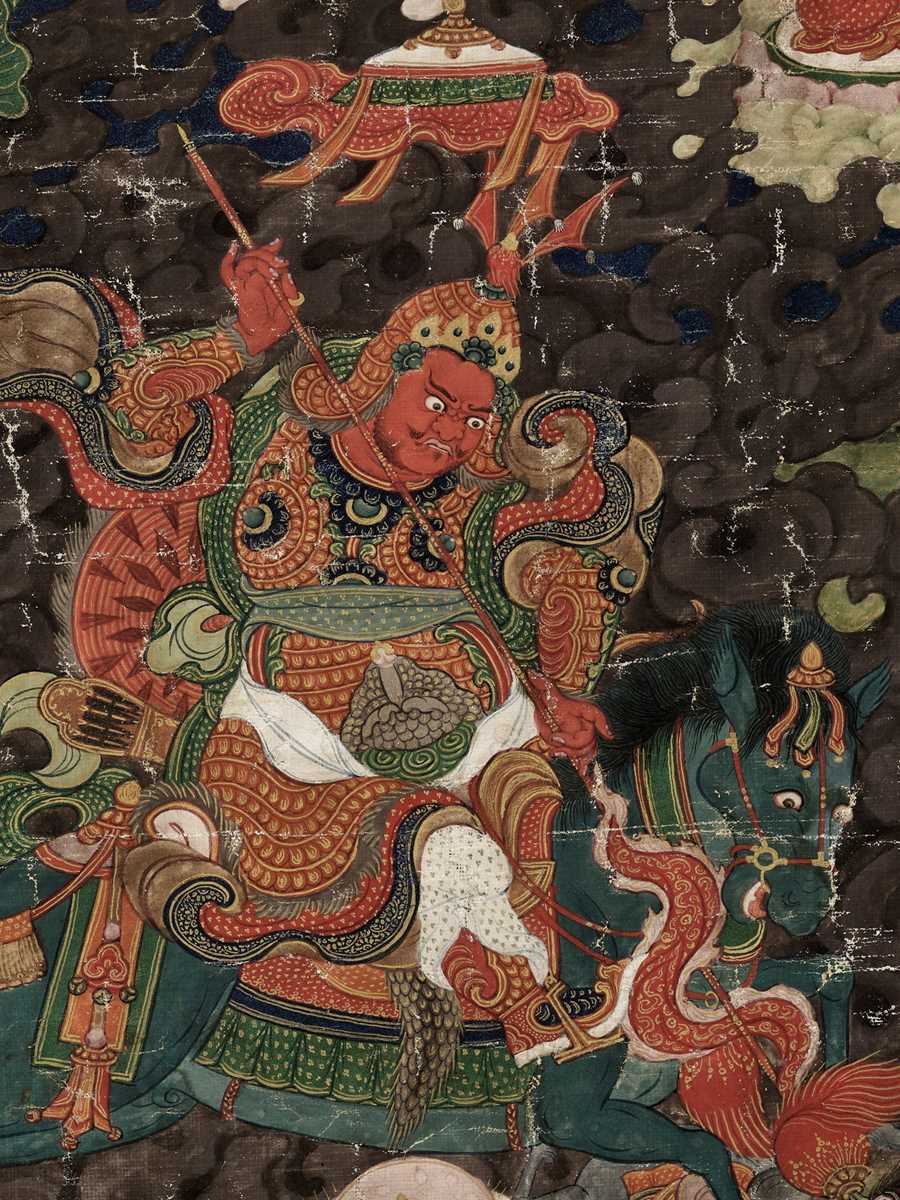
The Shambhala Warrior Prophecy, as shared by Joanna Macy, is not predictive mythology; it is civilizational psychology. It reframes collapse as initiation and locates agency not in conquest but in courageous compassion. Her framing of The Great Turning describes a macro-historical transition from an industrial growth society to a life-sustaining civilization.
You are asking a more technical question: how does this spiritual–cultural narrative relate to the development of planetary and bioregional intelligence?
Let’s treat this rigorously.
1. Myth as Operating System Upgrade
The Shambhala story functions as:
- A cognitive reframe (from domination → stewardship)
- An affective mobilizer (from despair → responsibility)
- A normative compass (from extraction → regeneration)
Planetary and bioregional intelligence are the institutional and informational architectures that operationalize that reframe.
Myth supplies motivation.
Intelligence systems supply coordination.
Without story, monitoring becomes technocratic.
Without monitoring, story becomes sentimental.
The integration is the point.
2. Planetary Intelligence: Monitoring Life at Scale
Your framing is correct: planetary intelligence must include real-time awareness of critical life processes.
This includes:
A. Biophysical Metrics
- Atmospheric CO₂ and radiative forcing
- Ocean heat content and acidification
- Freshwater availability
- Biodiversity integrity
- Soil carbon
- Nitrogen and phosphorus cycles
- Cryosphere stability
This corresponds to the planetary boundaries framework, but reframed not as limits alone — rather as vital signs of a living Earth system.
B. Socio-Cultural Metrics
If we are evolving a “mature planetary civilization” (David Korten’s term), then we must also monitor:
- Ecological literacy levels
- Trust networks
- Inequality indices
- Governance transparency
- Cultural narratives (media sentiment analysis)
- Regenerative capital flows
Planetary intelligence becomes the biosphere becoming self-aware through us.
3. Bioregional Intelligence: Embodied Awareness
Planetary dashboards alone are too abstract. Transformation happens in place.
Bioregional intelligence translates planetary awareness into:
- Watershed health monitoring
- Soil and forest cover mapping
- Local energy flows
- Local food security
- Social cohesion networks
- Indigenous knowledge integration
For example, in the Genesee–Finger Lakes region (which you have been working to make visible to itself), bioregional intelligence would mean:
- Tracking Lake Ontario watershed nutrient loading
- Mapping farmland soil regeneration
- Monitoring heat island patterns
- Visualizing restoration investment flows
- Making visible the relational network of regenerators
This is not data accumulation.
It is relational coherence-building.
4. The Psychological Layer: Awareness of Interconnectedness
The prophecy speaks of warriors who use weapons of compassion and insight.
In intelligence terms, this implies:
- Systems thinking education
- Reflexive awareness (seeing feedback loops)
- Cognitive humility (uncertainty literacy)
- Cross-scale reasoning (local ↔ global)
In other words:
Planetary intelligence requires meta-cognition.
A civilization that can monitor CO₂ but cannot regulate greed is not intelligent.
So the developmental question becomes:
Can we increase not only data resolution but moral and relational resolution?
5. Exemplifying It: Practical Pathways
To embody the Shambhala vision within planetary and bioregional intelligence systems, consider five design principles:
1. Vital Signs + Story
Every dashboard must be paired with narrative.
Numbers without meaning do not move hearts.
2. Nested Scales
Global → Continental → Bioregional → Watershed → Neighborhood.
Intelligence must cascade and interlink.
3. Public Visibility
Life-support indicators should be as visible as stock tickers.
Imagine:
- “Bioregional Health Index” displays in public spaces.
- Restoration progress clocks.
- Community soil carbon trackers.
4. Regenerative Capital Alignment
Finance must respond to ecological signals.
When watershed stress rises, capital flows toward restoration.
This links directly to your regenerative finance work.
5. AI as Pattern Amplifier, Not Oracle
AI can:
- Detect early warning signals.
- Integrate multi-scale datasets.
- Model restoration scenarios.
- Surface leverage points.
But it must remain transparently instrumental — a mirror, not a metaphysical agent.
6. The Deeper Synthesis
The Shambhala Warrior Prophecy calls for courage in a time of unraveling.
Planetary intelligence calls for coherence in a time of complexity.
Bioregional intelligence calls for belonging in a time of fragmentation.
Together, they form a three-part developmental arc:
- Emotional awakening (care)
- Cognitive integration (understanding)
- Institutional redesign (practice)
If you were to exemplify this in the Possible Planet ecosystem, it might look like:
- A Living Bioregion dashboard for the Genesee–Finger Lakes
- A Planetary Intelligence index that integrates biophysical + cultural signals
- Restoration Investment Trust mechanisms that respond to ecological stress metrics
- Studio dialogues that cultivate systems literacy and moral imagination
That is the Shambhala story translated into infrastructure.
7. The Core Insight
The prophecy is not mystical escapism.
It is a recognition that:
When a system becomes aware of its own self-destruction, it either collapses or reorganizes.
Planetary and bioregional intelligence are the scaffolding for reorganization.
The essential question becomes:
Can we increase collective awareness faster than destabilization accelerates?
If so, the Great Turning becomes structurally plausible.
If not, it remains myth.
If you wish, we can next:
- Draft a conceptual model linking Shambhala → Planetary Intelligence → Bioregional OS
- Outline a chapter for Developing Planetary Intelligence
- Or design a visible prototype (e.g., “Bioregional Vital Signs Portal” for GFL)
Where would you like to go next?